Featured
Housing NWT on shaky ground with Canada’s Auditor-General
Agency's failures mean unfair wait lists, health risks and reduced quality of life for lower-income residents

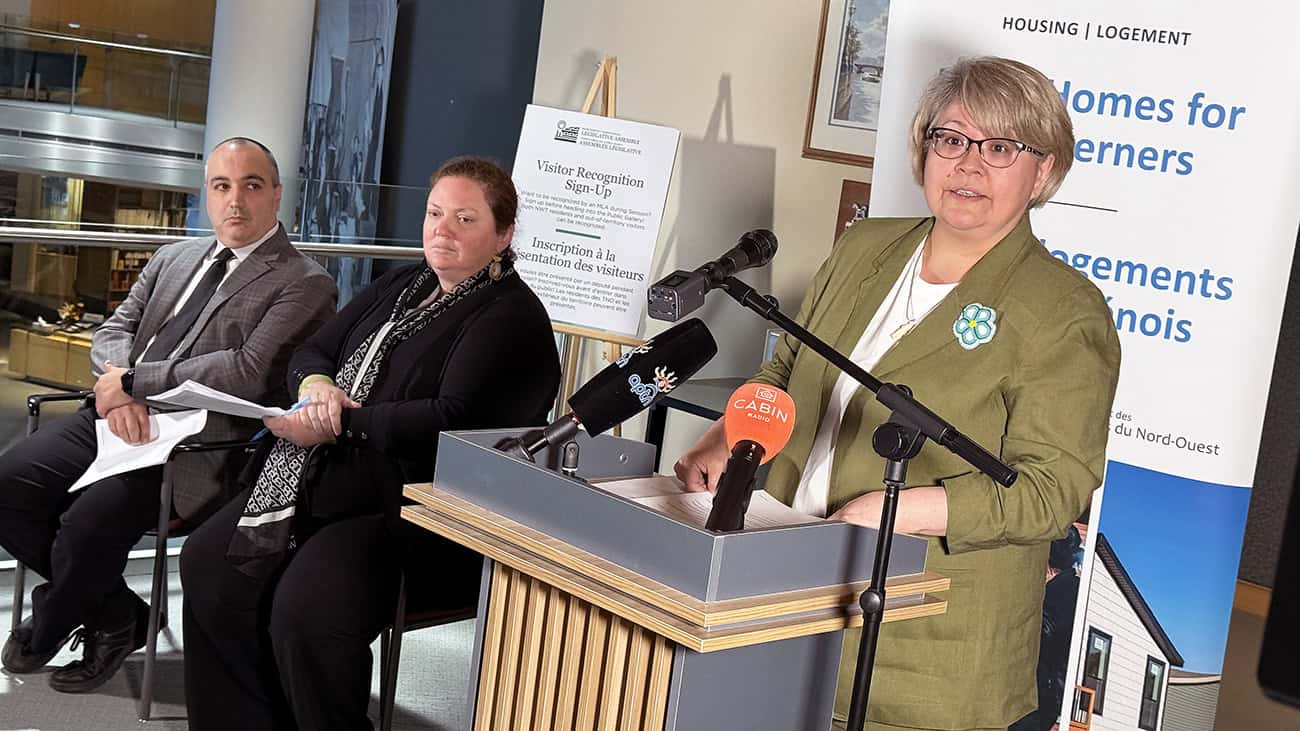
The GNWT’s public housing agency can’t say if wait-list criteria are being used, or what the condition of the units is, or what maintenance has been done, says the Auditor-General of Canada.
In a scathing rebuke of Housing NWT’s operations, the federal watchdog also found that Housing NWT could not ensure that funds for homeownership programs were properly used, or if key eligibility criteria for equitable access programs were being followed.
Overall, the Auditor-General of Canada concluded Housing NWT did not provide residents most in need with equitable access to housing and housing supports through its public housing and homeownership programs.
The A-G said some of the current audit findings are outstanding issues from previous audits in both 2008 and 2012.
“I will be clear, we are disappointed at the lack of progress on some of these issues,” said Senior Assistant Auditor General Paule-Anny Pierre, of the Office of the Auditor General of Canada, at a media conference Tuesday afternoon at the NWT Legislative Assembly.
“It is critical that Housing NWT deliver on its commitment to the well‑being of individuals and communities by providing equitable access to quality housing support for people most in need so that each individual has a safe place to call home.”
-
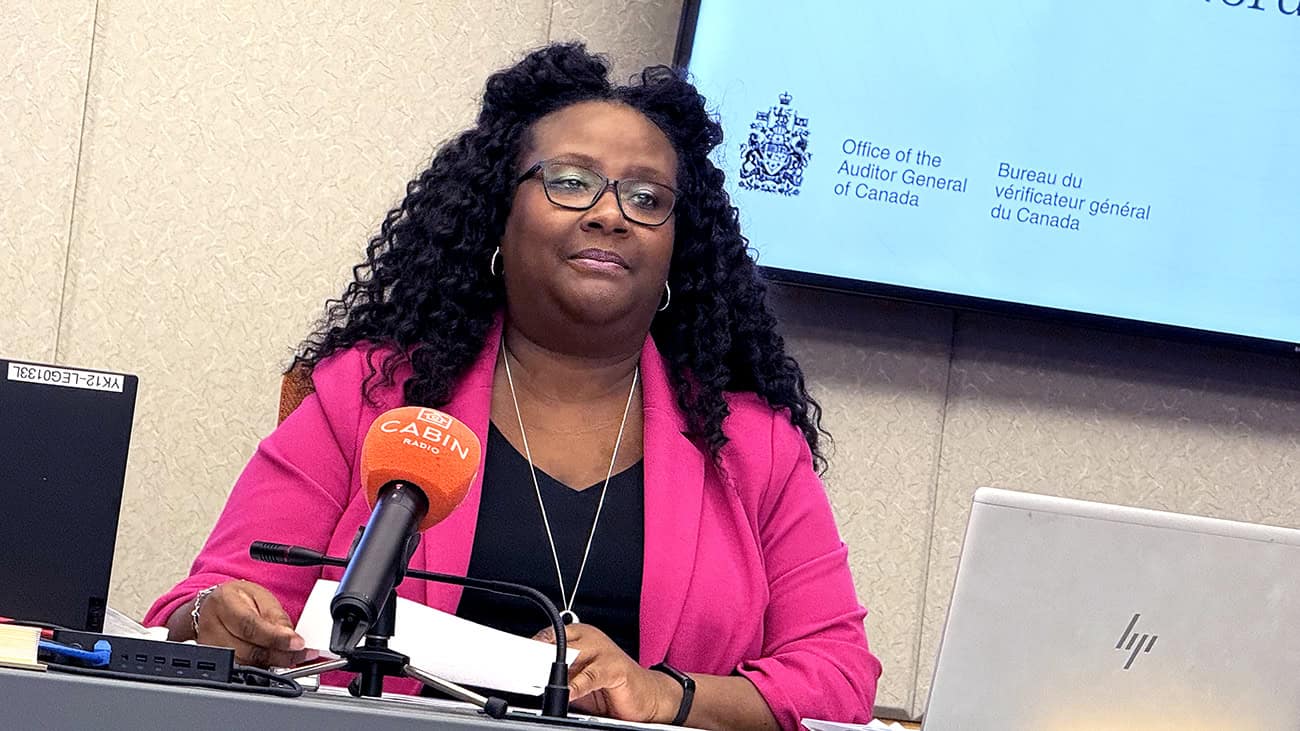
- Senior Assistant Auditor General Paule-Anny Pierre, of the Office of the Auditor General of Canada, speaks witth media at the NWT Assembly on October 28th. (James O’Connor/CKLB)
Looking for something positive to say, Pierre continued: “I will say that since the last audit, we see that the programs continued — funding was dispersed, applications were approved. So, there are residents who benefited from the program.
“Now that being said, without proper monitoring, or making sure that the criteria are applied as they should, we don’t know if those who are most in need are benefiting from these programs.”
The A-G’s report aknowledged that housing is a persistent challenge in the NWT due to factors such as the territory’s geography and climate.
Those same factors call for effective public housing and homeownership support, as they are essential to the health, safety, and stability of residents of the Northwest Territories.
“When you think of individuals who are going through hardship, every moment instance that passes by where they don’t have access to the suitable housing, it puts them at risk,” said Pierre.
Going forward, Housing NWT’s focus should be to “take action today” to ensure the recommendations found in the report are fully implemented and that the Legislative Assembly do “a proper monitoring” of the agency’s progress.
The report did not directly address the reason there is not enough liveable public housing units available for the population that needs them.
It did state there is not enough public housing to meet demand in the territory.
As a result, residents in need may become homeless or live in housing without enough space for all living there.
Effective management of the condition of Housing NWT’s public housing inventory is essential for the corporation to identify the adequacy of its public housing units, plan repairs, allocate resources efficiently, and prevent costly deterioration, stated the report.
Poorly maintained units can lead to health risks, reduce quality of life, and potentially increase inequalities, stated the report.
Lucy Kuptana is the Minister responsible for Housing NWT.
She was ready to meet the media right after Senior Assistant Auditor General Pierre was finished.
“This is not just another report,” said Kuptana, who is MLA for Nunakput. “This is a call to action, and we’re answering it. We are going to make changes and do things differently.
“We have accepted all recommendations from the Auditor General, and are taking concrete steps to strengthen oversight, improve housing conditions and support home ownership.”
-
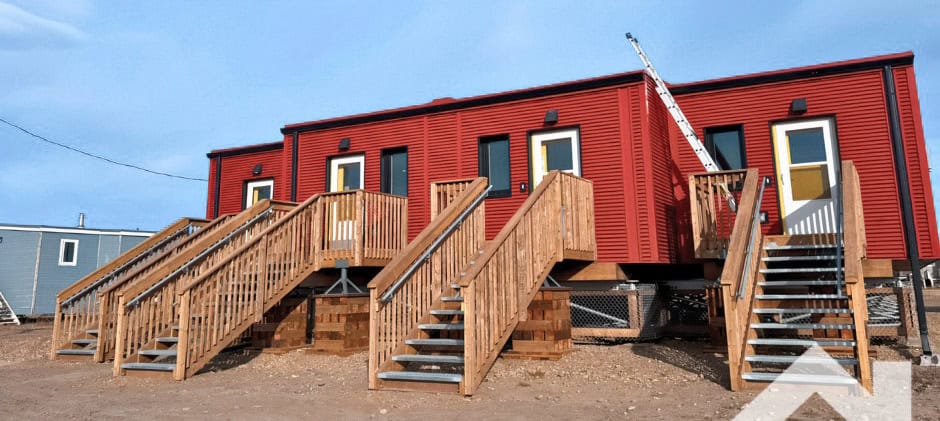
- A new Housing NWT modular fourplex in Paulatuk was completed in the fall of 2024 for single people, providing more affordable housing options in the community. (Photo courtesy Housing NWT)
She said Housing NWT is in the midst of an extensive renewal strategy, and that 31 of the 42 items in our renewal strategy, have been completed — including removing barriers to housing programs and improving housing maintenance.
“But we know there’s more work to do. I intend to continue to deliver real change for the residents of the Northwest Territories,” she said.
“We need to have good homes for people to flourish, and if we don’t have that at the community level, then our territory is going to fail.”
Kuptana said the NWT needs $63 million over the next 20 years, “just to catch up to our infrastructure deficit,” and that’s on top of what is needed in terms of replacing over 1,000 units over the next number of years.
“So housing is behind the eight-ball — we have a lot to catch up on and in terms of capacity.”
She said the GNWT is building 152 new public housing units over the life of the 20th Assembly, for a $120 million investment.
Also, $30 million will be spent to repair more than 500 existing units.
“While these incremental territorial investments will surely make a difference, we recognize that the NWT and Housing NWT cannot tackle this crisis alone,” the Minister said. “We need long-term, sustainable federal funding to make a lasting difference for the housing in the Northwest Territories.”
Key facts and findings:
- Across the territory’s 33 communities, Housing NWT is responsible for funding, supporting, and overseeing independent local housing organizations, which manage 2,365 public housing units delivering programs that support homeownership.
- In the last three fiscal years, public housing and homeownership supports represented on average $83.6 million, or 64%, of the corporation’s overall expenses.
- About 15% of the 15,356 households across the territory live in public housing, according to 2024.
- The waitlist for public housing as of last March was 918 households, with the average household on the list for about two years.
- Housing NWT funded 644 applications of the 1,654 homeownership program applications it received between April 1, 2023, and March 31, 2025.
“We found that as of March 31, 2025, unit‑condition ratings for public housing units were, on average, not completed within the required 2‑year period. The average time between unit‑condition ratings was every 2.28 years and differed by Housing Northwest Territories district office, including one district that had unit‑condition ratings completed on average a little over five years apart.”
Highlights of A-G’s recommendations:
- Housing NWT should systematically monitor local housing organizations to ensure that requirements for public housing unit allocation are met and corrective actions are taken if it identifies that allocations are not made in accordance with its policies, procedures, and guidance.
- Housing NWT should review and update its policies, procedures, and guidance to support the equitable allocation of public housing carried out by the local housing organizations.
- Housing NWT should monitor and document its monitoring of unit‑condition ratings and maintenance carried out by local housing organizations, as required, and follow up to ensure public housing units are adequately maintained.
-
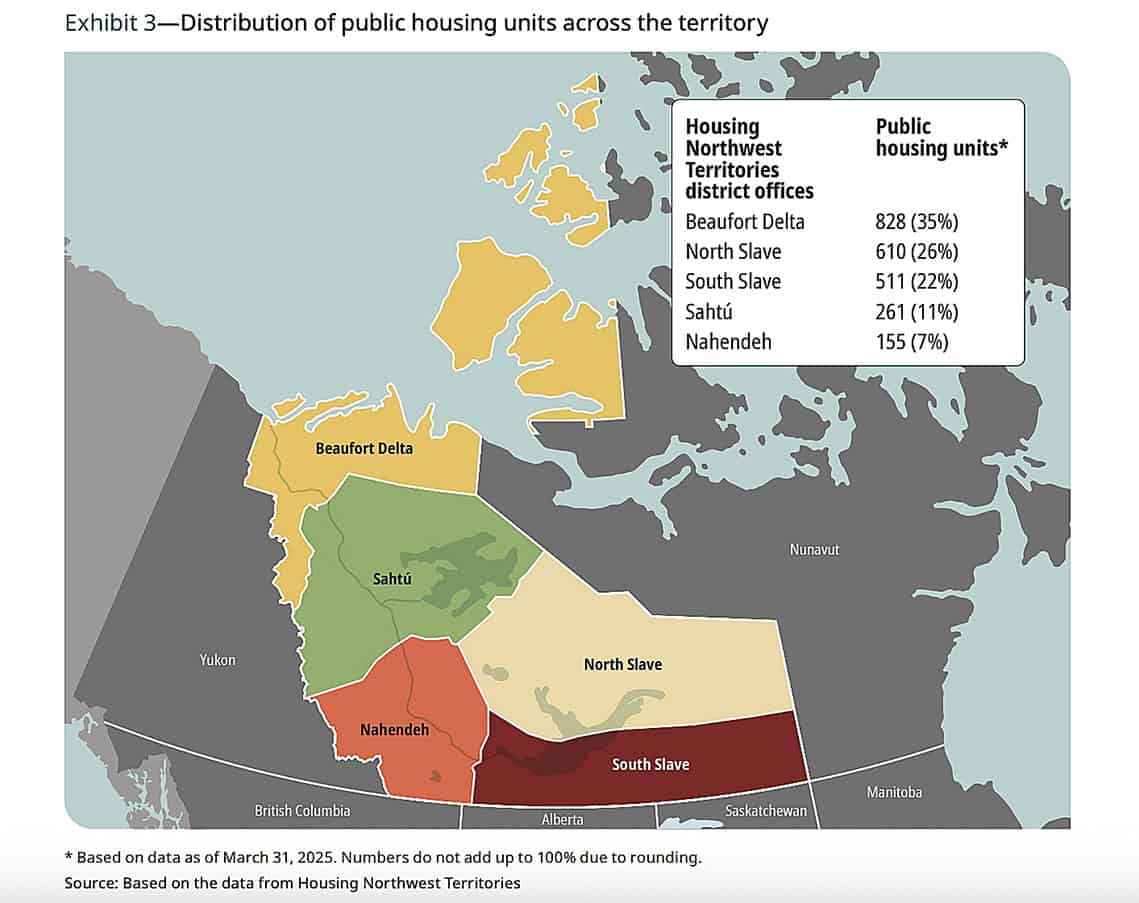
- Distribution of public housing units across the territory. (Image: Auditor General of Canada)
-