Featured
Dene Nation condemns ‘legacy of surveillance’ within RCMP
National Chief George Mackenzie's comments follow discovery of a history of RCMP spying on Indigenous activists, political movements


In response to recent revelations about the extent of RCMP surveillance against Indigenous communities and activism groups in the 1960s and 1970s, Dene National Chief George Mackenzie states that he is not surprised.
Chief Mackenzie issued a statement after CBC uncovered long-buried records of strategies to keep an eye on key Indigenous actors and political movements. He explains that this revelation shows how these systemic behaviors display severe infringements on civil liberties and discrimination against Indigenous communities.
“The RCMP’s surveillance activities are not isolated incidents but part of a long-standing history of monitoring in efforts to control Indigenous peoples in Canada. The RCMP has been involved in enforcing the Indian Act and monitoring Indigenous leaders and activists, that tried to suppress Indigenous voices and autonomy. This legacy of surveillance has been a tool of colonial control, undermining Indigenous sovereignty and self-determination.”
CBC’s investigations discovered records of RCMP wiretaps places within the Assembly of First Nations which were approved by the federal government, the monitoring of Indigenous political activity in the late 60s by the RCMP Security Service, and hundreds of surveillance reports labeled as “racial intelligence.
Chief Mackenzie’s statement notes that these tactics are similar to those used against other civil rights movements, adding that they are invasive, and work only to intimidate and silence those who fight for justice and equality.
“The ethical consequences of the RCMP’s surveillance run deep as if reflects the Government of Canada’s position on Indigenous rights advocates. The RCMP effectively criminalizes dissent and activism. This raises serious questions about the role of law enforcement in a democratic society and infringement on individual freedoms in the name of security. The lack of transparency and accountability in these operations further undermines public trust in the RCMP.”
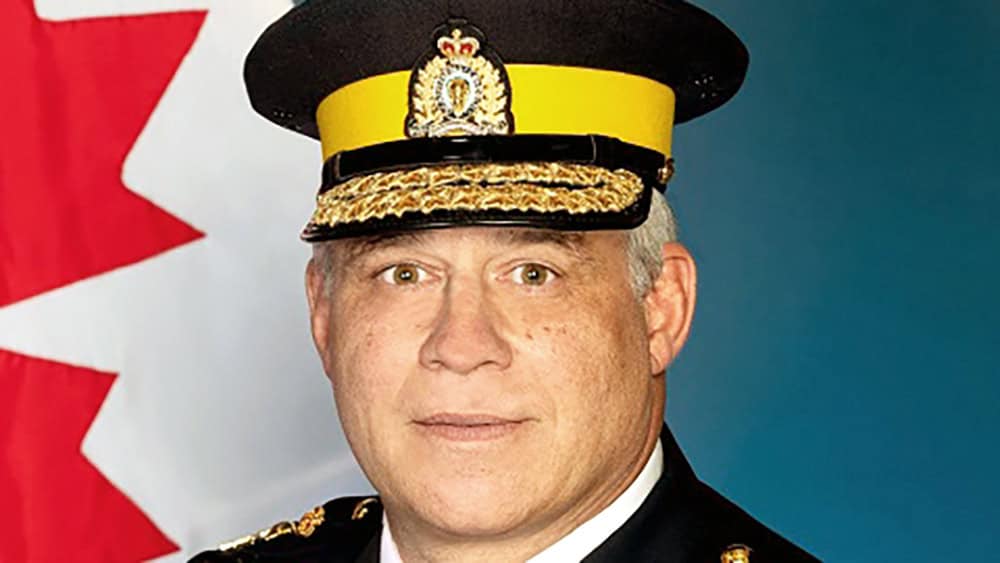
RCMP Commissioner Mike Duheme. (Photo: RCMP)
Following the discoveries made by CBC, the RCMP Commissioner Mike Duheme released a statement, acknowledging the wrongdoings of the RCMP before him, and expressing his commitment to learn from those mistakes.
“I express sincere regret, and while we cannot change the past, we can and must acknowledge that these actions and their impact continue to be felt today,” he stated.
“The RCMP today is not the same organization it was decades ago, but I acknowledge that more must be done. We have reflected on those past actions and continue to learn from them. Systemic racism has no place in the RCMP.
“Our values, oversight, training, and approaches to community engagement have evolved, guided by a commitment to respect, accountability, and service. This evolution is part of our ongoing journey of reconciliation, where we embrace the principle of ‘Nothing about us, without us’ and work to ensure First Nations, Inuit, and Métis voices, perspectives, and advice guide new and innovative ways of working together.”
Commissioner Duheme added that he intends to set up a meeting with Elders and Indigenous leaders to discuss how the RCMP can learn from its past and heal the relationships that have been damaged.