

Featured
Testing AI ‘nervous system’ for Fort Simpson’s energy grid
And in the North Slave Region, battery backup at Jackfish plant still being considered, says minister


Ontario-based CleanDesign Power Systems is implementing AI-driven Hybrid Energy Management Systems in northern and remote locations to reduce diesel reliance.
A pilot project is underway integrating renewable energy, such as the 104 kW, 436-solar panel project in Fort Simpson, with battery storage, optimizing power stability and lowering costs.
 Artificial Intelligence is used as a “nervous system” for distributed grids, managing renewable intermittency, predictive power, and optimizing energy storage dispatch.
These systems are particularly suited for remote/Arctic communities, mining sites, and off-grid locations to improve efficiency and sustainability.
In the NWT Assembly on Wednesday, Speaker Shane Thompson, in his role as Nahendeh MLA, spoke about the pilot project:
“Last summer in Yellowknife, I had the privilege of meeting Mr. Kenneth Peter Judge, visiting from Monaco. Our conversation turned to CleanDesign, a Canadian company specializing in AI-driven hybrid energy solutions. With over 15 years of proven success and 25 plus systems operational, including the B2Gold’s Goose Mine in Nunavut, this technology is transforming remote energy challenges.
“We explored bringing it to the Northwest Territories, zeroing in on Fort Simpson as a prime opportunity. CleanDesign focuses on reducing diesel consumption, cutting emissions, minimizing blackouts, and enabling silent running at night via advanced hybrid and battery integration.
“:For diesel-reliant communities like Fort Simpson, these innovations deliver reliability, affordability, and environmental gains essential for our North.”
Terms of the pilot project are still being finalized he pilot project being launched in Fort Simpson, tentatively scheduled for April 1st.
Strategic Infrastructure, Energy and Supply Chains Minister Caroline Wawzonek said the pilot project is to confirm whether the fairly significant infrastructure costs associated with this particular battery optimization system will be offset by savings in diesel fuel.

“We’ve structured the pilot process such that it won’t bring costs on the ratepayers right now,” she said.
“It’s being run as a pilot in a way that if there’s not enough savings to pay for it, then we would not be on the hook for anything extra, meaning that it’s not going to be on the backs of ratepayers.”
-
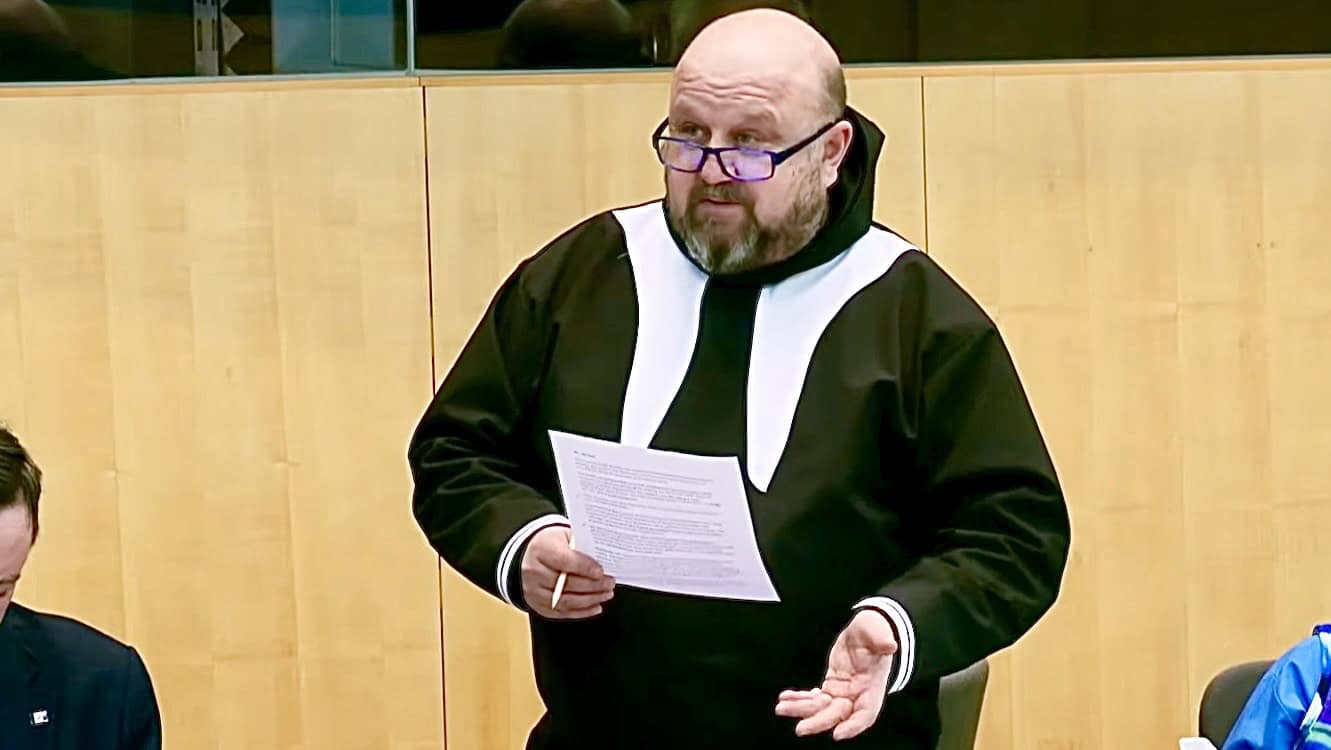
- Inuvik Boot Lake MLA Denny Rodgers in the NWT Assembly. (Image: Assembly Livestream)
Meanwhile, Inuvik Boot Lake MLA Denny Rodgers asked Health and Social Services Minister Lesa Semmler about covering the funding shortfall with Ottawa’s Non-Insured Health Benefits (NIHB) program provides registered First Nations and recognized Inuit with coverage.
Said Semmler: “I believe the shortfall for 2023-2024 was $7 million, and the shortfall for 2024-2025 was $13 million. However, I’d just like to add that these two years, we were provided the first time ever a supplementary additional payment on top of what they normally give us, which was a total of $25 million for each year. And previous years before this, as long as we’ve been administering NIHB, they’ve never given us that money. So the years before, we could probably calculate $20 million, $25 million on average, that we’ve been overspending. And with the cost of inflation, it’s only going up.”
Back on the energy file, Yellowknife North MLA Shauna Morgan asked if the Northwest Territories Power Corporation (NTPC) ever pursued the idea of installing a 10-megawatt battery at Jackfish Lake Power Generation Facility in Yellowknife to cover most of the delays between hydro failure and the diesel generators firing up.
“It that could store up to 15 minutes of reserve energy and thereby eliminate most of our power outages in the North Slave grid,” said Morgan.
Replied Minister Wawzonek: “Looking at battery storage does continue to be something that NTPC and strategic infrastructure are doing with respect to both the integrated systems planning work that’s underway for the whole of the territory as well as for the North Slave resiliency study that we are expecting out this spring.”